Your workplace benefits can support employees’ physical, mental, social, and financial wellbeing. However, this is only the case when employees understand what is available, can access it, and see how it fits into their lives. Otherwise, even valuable support may go unused.
That challenge is especially relevant during Canada’s Healthy Workplace Month (CHWM). Every October for over 25 years, CHWM has encouraged employers to build healthier, more inclusive, and more resilient workplaces nationwide. However, even as organizations expand their programs, perks, and benefits, many employees still feel overwhelmed, unsupported, or unsure where to begin.
The opportunity is not simply to add more resources, but to help employees identify what matters to them and confidently use the support you already offer. This year’s CHWM theme, “Wellness, Your Way,” reinforces that personalized approach: when you help employees find support that fits their needs, workplace wellbeing becomes more personal, accessible, and sustainable.
Why “one-size-fits-all” wellness falls short
Dialogue Health Technologies Inc.’s 2026 State of Workplace Well-Being report found that only 67% of employees with access to workplace health benefits used them in the past year. Among those who did, only 20% were very satisfied.1 These findings point to a clear disconnect: access alone doesn’t ensure employees can understand, navigate, or benefit from the support available.
So why is this disconnect happening?
Because employees bring different wellness goals, challenges, and priorities to work, the same program won’t feel relevant to everyone. Some employees may be focused on physical health, while others may prioritize stress management, financial resilience, or stronger social connections.
Flexibility in both the support employees choose and when they access it makes it easier to fit wellbeing into daily life and engage with benefits that reflect individual needs.
The hidden value in existing group benefits plans
Many organizations already have the tools they need to support employee wellbeing. Some of the common ones include:
- Employee Assistance Programs (EAPs)
- Mental health resources
- Financial wellness tools
- Health and wellness spending accounts
- Learning and development opportunities
- Fitness and lifestyle support
- Paramedical services, such as nutrition counselling and physiotherapy
- Prescription drug coverage
- Vision care
The challenge is often not a lack of support, but a lack of clarity. Employees may not know what is available, may feel overwhelmed by the volume of information, or may hear about benefits only during onboarding and renewal periods.
As a result, they may not recognize how those benefits connect to their personal wellness goals, leaving valuable support unused.
So what’s the solution?
Making wellness personal
We know wellbeing priorities vary from person to person, spanning physical and mental health, social connection, and financial wellness. As such, a personalized approach helps employees connect their priorities with the benefits and other resources they already have available to them.
Employers can make benefits easier to use in several ways:
- Offering ongoing education and guidance around available benefits
- Offering a variety of wellness experiences exploring different health dimensions (e.g., physical, mental, financial, and social)
- Raising awareness of available benefits through consistent promotion
Together, these actions help employees identify which benefits can provide the most value for their individual wellness goals.
Cowan’s Wellness Week offers one example of how these principles can work in practice.
Cowan creates opportunities for employees to engage with wellness their way
At Cowan, wellness is more than simply offering resources; our strategy is shaped by the varying needs and goals of our employees.
Our second annual Wellness Week put this personalized approach into practice through activities supporting employees’ physical, mental, social, and financial wellbeing. We invited employees to choose the experiences and resources that best aligned with their interests and goals, including:
- On-site, interactive nutrition kiosks with nutritious recipes and access to a registered dietitian
- Virtual session on social media and mental health through our Employee Family Assistance Program (EFAP) provider
- Wellness bingo offering prizes for completed wellness tasks
- Continual sharing of wellness tips, resources, and educational content
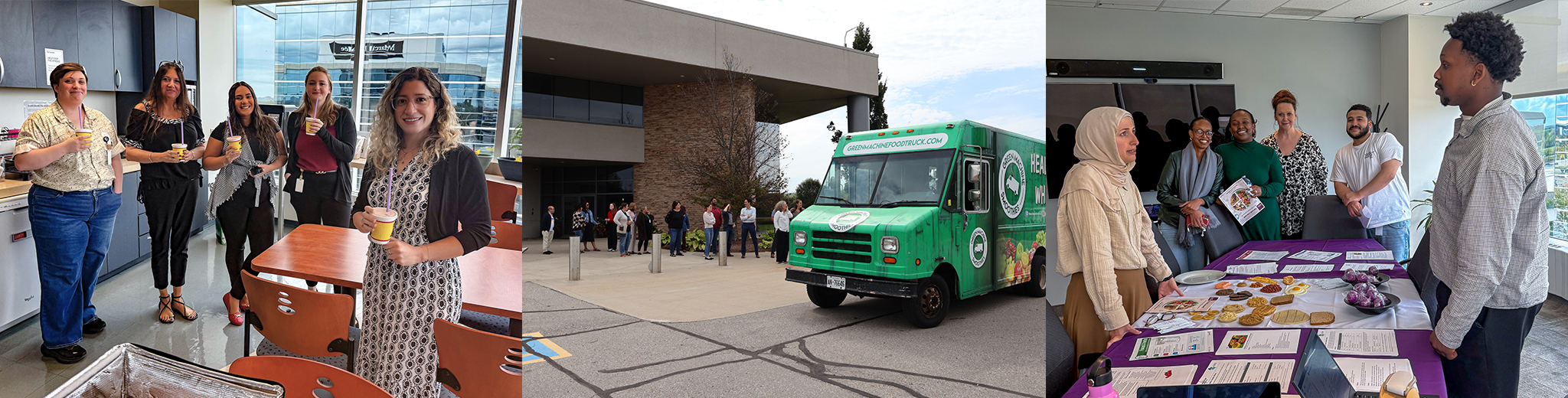
An employee looking to improve their nutrition may connect with a dietitian, while another focused on their mental health may attend the session with our EFAP provider. The ability to choose helps create a more meaningful experience.
Supporting wellness beyond awareness
Simply offering group benefits and wellness tools isn’t enough, as employees need to understand how these resources can fit into their lives and fulfill their wellness goals. Making employees aware of the available benefits during onboarding is a great start—ongoing communication helps them move forward with intention.
What does ongoing communication look like for organizations?
Ongoing communication means regularly highlighting available benefits, sharing employee success stories, and showing how specific resources can support real-life priorities such as managing stress, eating well, building financial confidence, and strengthening social connections.
When employees can easily see how benefits align with their wellness priorities, they’re more likely to make use of them. Organizations can support this by moving beyond occasional promotion to ongoing, consistent support.
Workplace wellness starts with choice
The future of workplace wellness depends less on how many programs organizations offer and more on whether employees can recognize, access, and use the support that matters to them. Giving employees meaningful choices can help create a culture where wellness feels personal, accessible, and sustainable.
Ready to help employees get more value from the benefits you already offer?
Connect with the Cowan Benefits™ team to embrace the personalized approach and build a wellness strategy that reflects the diverse needs of your workforce.
Sources
- (August 31, 2026). 2026 State of workplace well-being: What Canadian employers need to know about benefits. Retrieved from URL↵